

Cwt Y Bugail Slate and Lead
Perth City
COMO Treasury Building
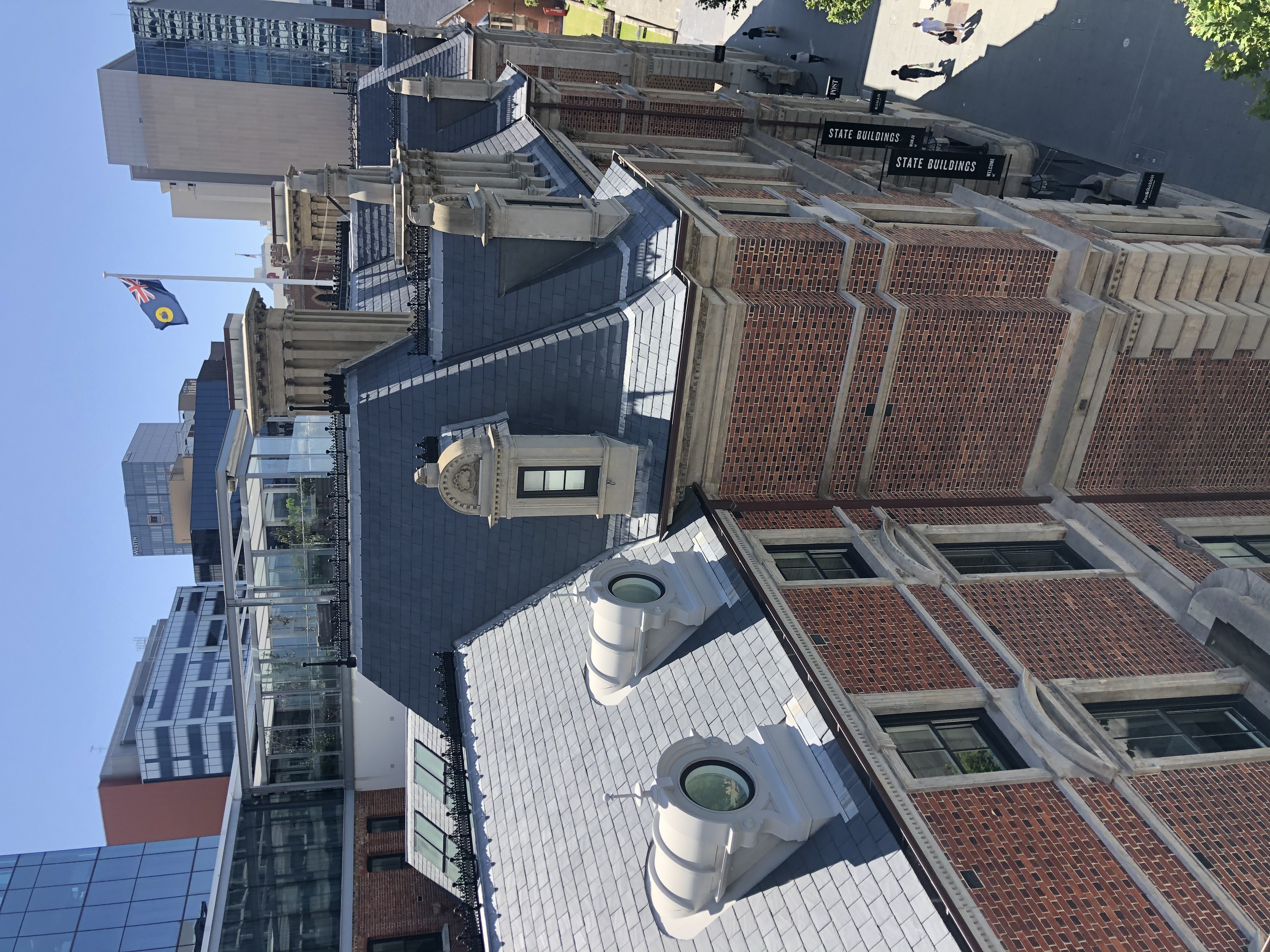
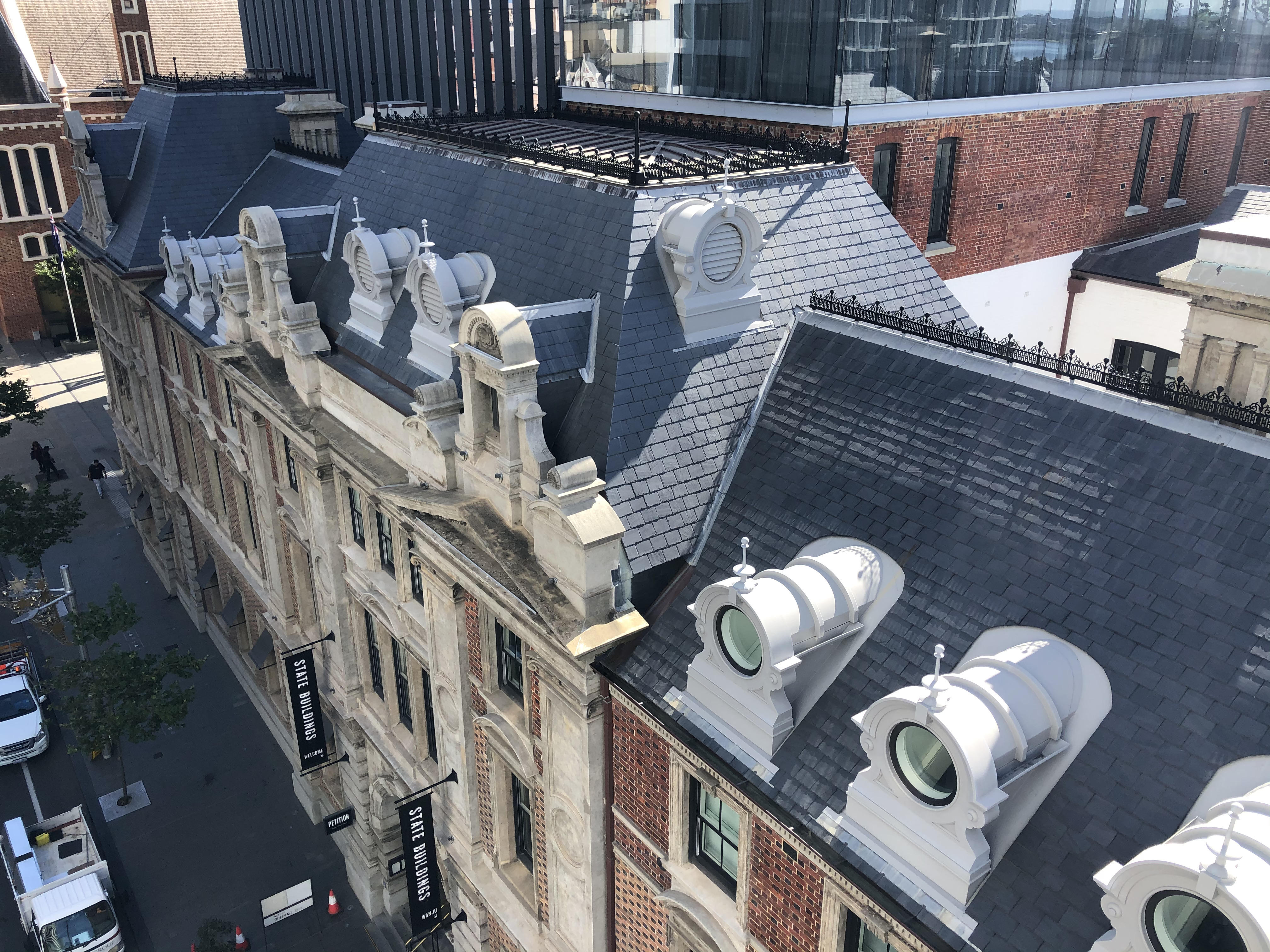
Cwt Y Bugail slate and lead roofing installed across the COMO Treasury Building, restoring one of Perth's most recognised heritage landmarks to its original character.



In many cases, yes. Matching depends on the original material and availability.
We consider:
Where an exact match is not possible, we recommend the closest suitable alternative. For material guidance, refer to Products.
A natural slate roof can last 75 years or more when installed correctly.
Lifespan depends on:
Slate is often chosen because it can be a long-term, generational roof system.
Slate roofs can often be repaired if the overall system is still sound.
Repairs are common where there is:
If widespread failure is present, a full replacement may be the more reliable solution. We assess this during inspection.
Slate itself needs very little maintenance. Most attention is on the components around it:
A simple inspection schedule helps keep everything performing as intended.
Slate is heavier than metal roofing. If your home was built for tiles or slate, it is often suitable.
If you are changing from a lighter roof type, we will check structure and loading requirements before proceeding.
Leadwork refers to traditional sheet lead detailing used for waterproofing and finishing.
It is commonly used in:
Lead is highly durable and well suited to long-life heritage roofing when installed correctly.
Lead is typically used for:
It is chosen because it forms to complex shapes reliably.
Lead is safe when used correctly in roofing applications. The key is:
We follow safe work practices when working with lead.
Lead is one of the longest-lasting roofing materials when installed correctly. It is often specified for heritage work because it can perform for decades with minimal intervention.





.svg)